
If you've researched hair removal in Rossendale, you've almost certainly come across both terms: laser hair removal and IPL. They're often used interchangeably, which adds to the confusion, and you'll find strong opinions online about which is better. So what's the actual difference, and does it really matter for your results?
The honest answer is that the two technologies are genuinely different, but the difference between them is often less important than the marketing suggests. What matters far more is the quality and calibration of the specific device being used, and the experience of the person operating it.
This guide explains the real difference between IPL and laser hair removal in plain terms, looks at the pros and cons of each, and explains why we use medical-grade IPL at our clinic in Crawshawbooth, Rossendale.
Both IPL and laser hair removal use light energy to target the pigment in hair and reduce growth over a course of treatments. The main difference is that laser uses a single concentrated wavelength of light, while IPL uses a broad spectrum. Both can deliver excellent long-term results when the right device is used correctly on a suitable client, and the quality of the device and the skill of the practitioner usually matter more than the technology type alone.
What is the difference between IPL and laser hair removal?
The main difference is the type of light each one uses.
Laser hair removal uses a single, concentrated wavelength of light.
IPL, which stands for Intense Pulsed Light, uses a broad spectrum of light across multiple wavelengths.
Both work in the same fundamental way: the light is absorbed by the pigment in the hair, converts to heat, and reduces the follicle's ability to grow hair over a course of sessions. In practice, the quality and calibration of the device, and the experience of the practitioner, often make more difference to your results than the technology type alone.
Key takeaways
| What matters | Why it matters |
|---|---|
| Laser uses one wavelength, IPL uses many | Laser light is a single concentrated wavelength. IPL is a broad spectrum of light. Both target pigment in the hair. |
| Both deliver effective hair reduction | When the right device is used correctly, both technologies achieve significant long-term hair reduction. |
| IPL is more versatile | The same broad-spectrum technology can also treat pigmentation, redness and skin rejuvenation, not just hair. |
| Device quality matters most | A medical-grade device in experienced hands outperforms a cheap version of either technology. |
| Practitioner skill is critical | Correct settings, skin assessment and treatment planning affect results more than the IPL versus laser label. |
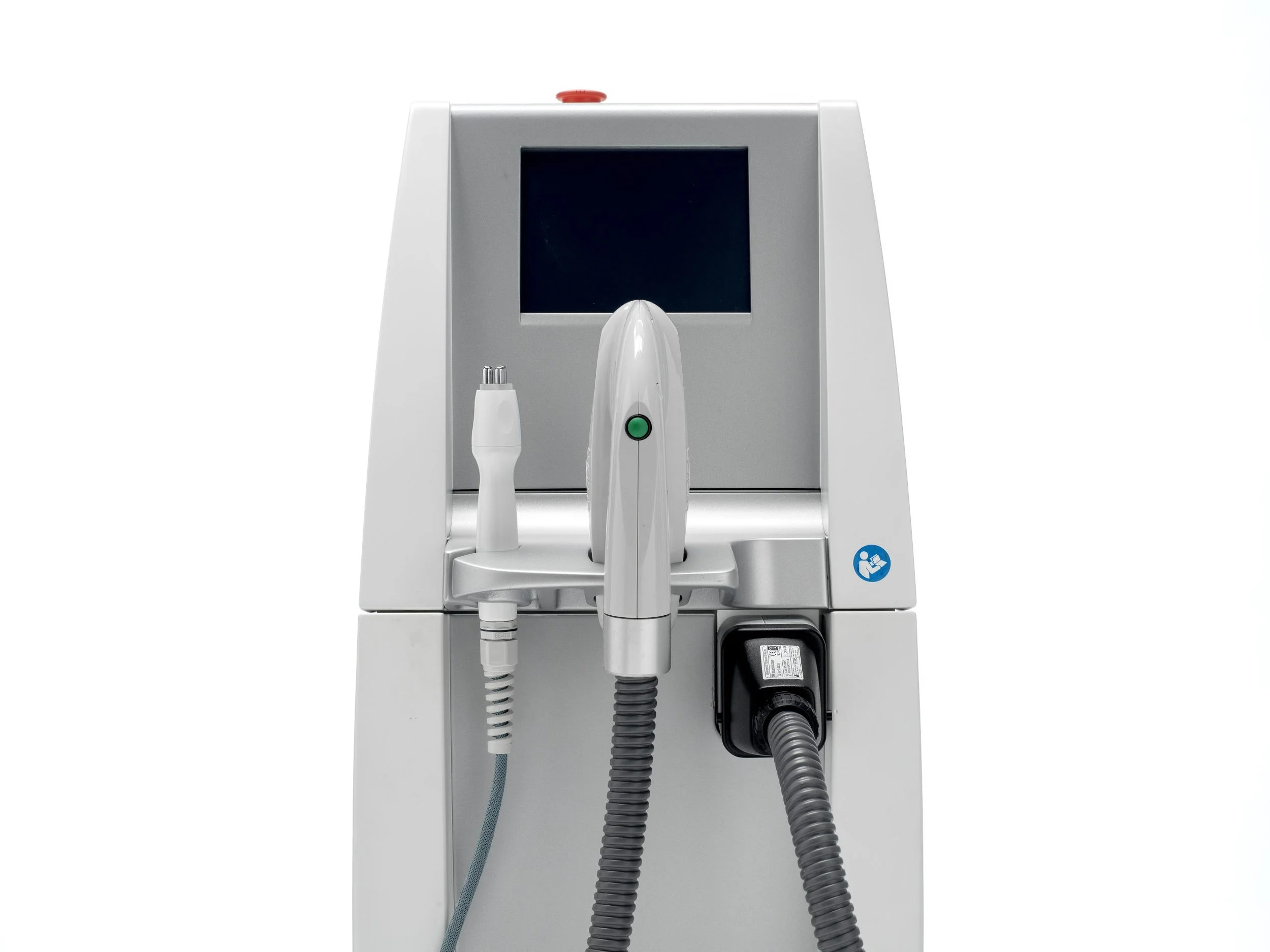
| We use medical-grade IPL | At Lottie Laser Clinic we use the Lynton Dynamix, a medical-grade IPL system trusted by NHS organisations and aesthetic professionals across the UK. |
How laser hair removal works
Laser hair removal devices produce a single, concentrated wavelength of light. Because the light is so focused, it can be very precisely targeted. Different types of laser, such as Alexandrite, Diode and Nd:YAG, use different wavelengths, each suited to particular skin types and hair characteristics.
The concentrated nature of laser light is often described as its main strength. It allows for very targeted treatment, which can be useful in certain cases. Different laser types are used across a range of hair and skin treatments, though an individual laser device tends to be more treatment-specific than a broad-spectrum IPL platform, which can address several different concerns.
How IPL hair removal works
IPL, or Intense Pulsed Light, works on the same principle of targeting pigment in the hair, but it delivers a broad spectrum of light across multiple wavelengths rather than a single one. Filters are used to focus the light into the most effective range for the treatment being carried out.
The broad-spectrum nature of IPL is actually its biggest advantage. Because it covers multiple wavelengths, the same medical-grade IPL platform can be used not just for hair removal, but also for treating pigmentation, redness, rosacea and overall skin rejuvenation. This is why IPL systems are so widely used in professional clinics, and why a quality IPL platform offers more for clients over time.
It's worth being clear about one thing here. There's a meaningful difference between the cheap home IPL devices sold for at-home use and the medical-grade IPL systems used in professional clinics. They share a name but are not the same level of technology, which is a big part of why IPL sometimes gets an unfairly mixed reputation.
IPL vs laser hair removal: a side-by-side comparison
| Feature | Laser | IPL |
|---|---|---|
| Light type | Single concentrated wavelength | Broad spectrum, multiple wavelengths |
| How it targets hair | Absorbed by pigment in the hair | Absorbed by pigment in the hair |
| Versatility | Often more treatment-specific, depending on the laser type | Broadly versatile across hair reduction, pigmentation, redness and rejuvenation |
| Results | Effective long-term reduction | Effective long-term reduction |
| Sessions needed | Typically 6 to 8 | Typically 6 to 8 |
| What matters most | Device quality and practitioner skill | Device quality and practitioner skill |
As the table shows, the two are more similar than different in the ways that count. Both need a course of around 6 to 8 sessions, both target pigment in the hair, and both rely heavily on the quality of the device and the experience of the practitioner. You can read more about session numbers in our guide on how many laser hair removal sessions you'll need.
Which skin and hair types respond best?
Whichever technology is used, suitability comes down to the same factors. Both laser and IPL target the pigment in the hair, so the colour and coarseness of your hair has a big influence on results.
- Darker, coarser hair usually responds best, because it contains the most pigment for the light to target.
- Very light blonde, white, grey and red hair may not respond well, as there is little pigment to absorb the light energy.
- Suitability also depends on your skin type and the treatment area, which is why settings are always tailored to the individual.
- This is exactly why consultation and patch testing matter. They allow us to assess your skin and hair properly and give you an honest view of what to expect before you commit to a course.
If you're unsure whether you're a good candidate, a consultation and patch test is the best place to start. We will always give you an honest assessment rather than selling you a course that may not suit your hair or skin.
So which is better, IPL or laser?
This is the question everyone wants answered, and the honest response is that neither is simply "better" across the board. Each can be the right choice depending on the device, the clinic and the individual client.
What we can say confidently is this. A medical-grade device, properly calibrated and used by an experienced practitioner, will deliver excellent results whether it's IPL or laser. A cheap, poorly calibrated device in inexperienced hands will deliver disappointing results whether it's IPL or laser. The category label is far less important than these factors.
For our clinic, medical-grade IPL was the right choice because it delivers excellent hair removal results and offers the versatility to treat a wide range of skin concerns with the same trusted platform. That means our clients across Rossendale and Lancashire can access hair removal, pigmentation treatment, redness treatment and skin rejuvenation all under one roof.
Want to know what results you could expect?
Book a consultation and patch test at Lottie Laser Clinic in Crawshawbooth, Rossendale, and receive a personalised treatment plan based on your skin type, hair type and treatment goals.
Book your consultationThe technology we use at Lottie Laser Clinic
Rather than getting caught up in the IPL versus laser debate, we focused on choosing the best possible medical-grade platform for our clients. That platform is the Lynton Dynamix.
Why we use it
Lynton Dynamix IPL
Medical-grade IPL system manufactured in the UK by Lynton Lasers, refined over 30 years of clinical IPL development. Trusted by NHS organisations and aesthetic professionals across the UK. Highly calibrated and tightly controlled energy output, refined by DynamicReflex Technology, with settings tailored to each skin type and hair characteristic. The same platform also powers our IllumiFacial, pigmentation and skin rejuvenation treatments.
For our clients, this means consistent, effective hair reduction from a system used and trusted in clinical settings, delivered by an experienced therapist. If you'd like to understand more about why equipment quality matters so much, our article on why cheap laser hair removal is not always better goes into detail.
What results can you expect from medical-grade IPL?
The practical question behind the IPL versus laser debate is simple: will it actually work? With medical-grade IPL and a complete course of treatment, the answer for most clients is a clear yes.
Many suitable clients can achieve around 70 to 90 percent long-term hair reduction after completing a full course, although individual results vary. Any remaining hair is typically finer, lighter and far less noticeable than before. Results depend on:
- Hair colour and thickness, with darker, coarser hair responding best
- Your skin type and hair characteristics
- The treatment area
- Hormonal influences
- Completing the full recommended course
You can read more about how long results last in our guide on whether laser hair removal is permanent.
Common misconceptions about IPL and laser
A lot of the confusion around this topic comes from a few persistent myths. Here's the honest picture.
- "IPL never works." This usually comes from comparing cheap home devices to professional treatment. Medical-grade IPL in a professional clinic delivers excellent results.
- "Laser is always more powerful." Power and effectiveness depend on the specific device and how it's used, not simply on whether it's laser or IPL. A quality IPL system is highly effective.
- "They're exactly the same thing." They're not. They use different types of light. But for hair removal results, the practical difference is smaller than people assume.
- "You need fewer sessions with laser." Both typically require a course of around 6 to 8 sessions because both rely on the hair growth cycle, which is the same regardless of the technology.
- "IPL is only for skin, not hair." Medical-grade IPL is genuinely effective for hair removal and has the added benefit of treating skin concerns too.
Treatments at Lottie Laser Clinic
One of the advantages of our medical-grade IPL platform is its versatility. The same trusted Lynton technology delivers a full range of treatments at our Rossendale clinic.
Medical-grade IPL hair removal for face and body, delivering long-term hair reduction. Find out about areas treated and what to expect at your consultation and patch test.
Find out more → Skin rejuvenation IllumiFacialIPL skin treatment for pigmentation, redness, uneven tone and overall complexion clarity, using the same trusted Lynton platform.
Find out more → Even skin tone Pigmentation RemovalTargeted treatment for sun spots, age spots, freckles and uneven pigmentation, helping restore a clearer, more even complexion.
Find out more → Combination treatment IllumiSmoothA two-phase treatment combining IPL with fractional resurfacing for skin clarity, tone and texture.
Find out more →Why clients across Lancashire choose Lottie Laser Clinic
★★★★★ Rated 5.0 from 42 Google Reviews
We work with clients from Rossendale, Rawtenstall, Haslingden, Burnley, Blackburn, Ramsbottom and across the wider Lancashire area. What our clients value:
- Medical-grade Lynton IPL technology. Trusted by NHS organisations and aesthetic professionals across the UK.
- Consultation and patch test. A £30 consultation and patch test appointment, with no obligation to book a course.
- 15+ years of professional therapist experience. Lottie Dalton personally assesses, plans and delivers your treatment, and is currently completing her Level 4 qualification in laser and IPL.
- Honest, realistic advice. We help you understand the technology and what results you can genuinely expect, rather than chasing buzzwords.
- A versatile platform. Hair removal, pigmentation, redness and skin rejuvenation all available under one roof.
Frequently asked questions
Is IPL or laser better for hair removal?
Neither is simply better across the board. Both target pigment in the hair and both deliver excellent long-term reduction when a medical-grade device is used by an experienced practitioner. The quality of the device and the skill of the practitioner matter more than whether it's IPL or laser.
Does IPL hair removal actually work?
Yes. Medical-grade IPL used in a professional clinic is highly effective for hair removal. The mixed reputation IPL sometimes has usually comes from comparing cheap home IPL gadgets to professional treatment, which isn't a fair comparison.
Why does Lottie Laser Clinic use IPL rather than laser?
We chose the medical-grade Lynton Dynamix IPL system because it delivers excellent hair reduction and is also versatile enough to treat pigmentation, redness and skin rejuvenation using the same trusted platform. It's UK-made and trusted by NHS organisations and aesthetic professionals across the UK.
Do IPL and laser need a different number of sessions?
No. Both typically require a course of around 6 to 8 sessions, because both rely on treating hair across its natural growth cycle. You can read more in our guide on how many sessions you'll need.
Is IPL or laser safer for my skin?
Both are safe when carried out professionally with a properly calibrated medical-grade device and a thorough consultation and patch test. Safety depends far more on the quality of the equipment and the experience of the practitioner than on the technology type. We assess every client individually before treatment.
Can IPL treat skin concerns as well as hair?
Yes, and this is one of its main advantages. The same medical-grade IPL platform can treat pigmentation, redness, rosacea and overall skin clarity, which is why we can offer IllumiFacial and pigmentation removal alongside hair removal.
Is laser hair removal popular in Rossendale?
Laser and IPL hair removal is one of the most requested treatments at Lottie Laser Clinic, with clients travelling from Rossendale, Rawtenstall, Haslingden, Burnley and across Lancashire for treatment.
Do you treat clients from across Lancashire?
Yes. We're based in Crawshawbooth, Rossendale, and see clients regularly from Rawtenstall, Haslingden, Burnley, Blackburn, Ramsbottom and across the wider Lancashire area. Get in touch to arrange your consultation and patch test.