
How Many Laser Hair Removal Sessions Will I Need?
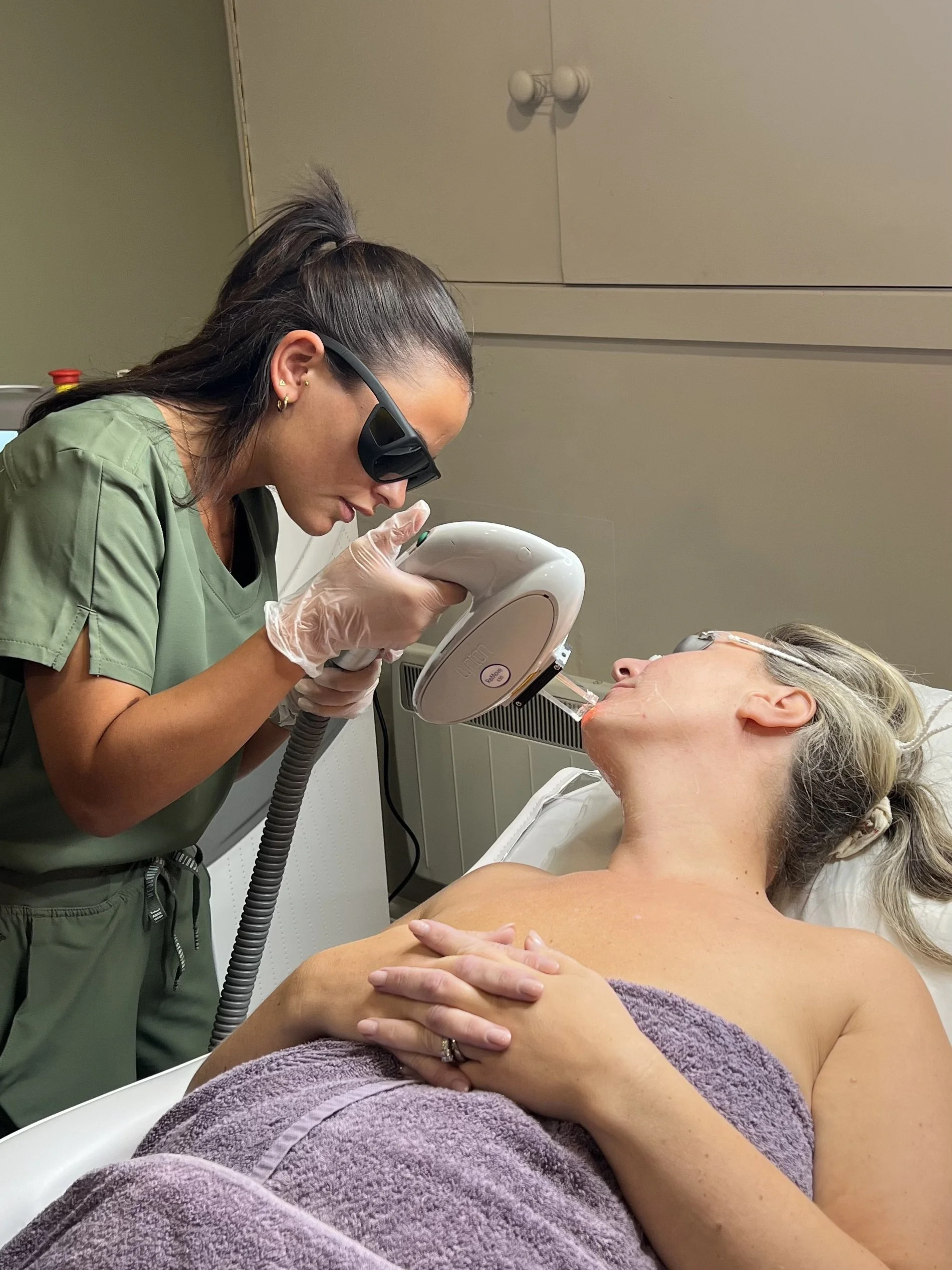
It's the most common question we hear from clients considering laser hair removal at Lottie Laser Clinic. How many sessions will I actually need. And it's a fair question. Laser hair removal is a financial and time commitment, and the answer affects how you plan, what you spend, and how soon you'll see results.
The honest answer is that there's no single number that fits every client. The right number depends on the area being treated, your hair type, your skin type, your hormones, your age and even what hair removal methods you've used previously. A clinic that quotes you the same number of sessions as everyone else isn't really giving you a personalised answer.
This guide explains the typical session ranges, the factors that move the number up or down, and what to realistically expect during and after your course at our clinic in Crawshawbooth, Rossendale.
Most clients need 6 to 8 sessions of laser hair removal, spaced 4 to 8 weeks apart, to reach permanent hair reduction. The exact number depends on the treatment area, your hair colour and thickness, skin type, age and hormones. After your initial course, occasional yearly top-ups are usually enough to maintain results.
Key takeaways
| What matters | Why it matters |
|---|---|
| Typical course is 6 to 8 sessions | This is the standard range that delivers significant, lasting hair reduction for most clients across most treatment areas. |
| Spaced 4 to 8 weeks apart | Treatments need to match the hair growth cycle. Too close together is wasted effort, too far apart slows progress. |
| Some clients need more | Hormonal hair, lighter or finer hair, certain body areas and previous waxing or epilation can all extend the course. |
| Some clients need fewer | Dark coarse hair on areas like underarms often responds faster than other areas, so results come quickly. |
| Top-ups maintain results | After the initial course, most clients need only occasional top-ups every 12 to 18 months to keep results long-term. |
| Medical-grade matters | Refined energy delivery from the Lynton Dynamix IPL system typically achieves results in fewer sessions than weaker devices. |
The typical course length
For most clients, a course of 6 to 8 sessions of laser hair removal achieves significant, lasting hair reduction across the most commonly treated areas. That's the figure you'll see quoted by reputable clinics across the UK, and it matches what we typically see at Lottie Laser Clinic.
Across those 6 to 8 sessions, you should expect to see hair gradually become finer, lighter, slower to grow back, and patchier in coverage. By session 4 or 5, most clients notice they've gone from shaving every couple of days to shaving once a week or less. By the end of the course, the majority of treated hair is significantly reduced or gone entirely.
For many clients, this is the point where laser hair removal starts feeling worthwhile. Holidays become easier to plan, shaving becomes less of a daily routine, and confidence often grows long before the course is finished.
That said, "6 to 8 sessions" is a useful starting point, not a guarantee. The factors below explain why your personal number might be lower or higher.
What affects how many sessions you'll need
Six things influence the number of sessions most. Some are about you, some about the treatment area, some about your medical history.
Hair colour and thickness
Laser hair removal targets melanin (the pigment that makes hair dark) in the hair follicle. Dark, coarse hair contains the most melanin and responds the most strongly to treatment. Lighter, finer hair contains less melanin and typically needs more sessions to reach the same result. Blonde, white, grey or red hair often responds poorly to laser and IPL because there isn't enough melanin to target effectively.
Skin type
Modern medical-grade systems like the Lynton Dynamix are designed to treat a wider range of skin tones safely than older or budget devices. Your skin type affects the settings used, and at consultation we'll assess this using the Fitzpatrick scale and recommend the right approach. Some skin and hair combinations are particularly responsive and others may need a longer course.
The treatment area
Different body areas have different hair growth cycles and different hair densities. Underarms tend to respond quickly. The face, particularly for hormonal hair, often takes longer. We've included a typical session range by area below.
Hormones and medical conditions
Hormonal hair, particularly facial hair on women linked to PCOS, perimenopause or other hormonal factors, can be more persistent. Hair removal still works well, but the course may need to be longer and top-ups more regular to manage ongoing hormonal regrowth. This isn't a problem with the treatment, it's how your body works.
Age
Older skin and hair sometimes responds slightly more slowly than younger skin, particularly where hair is becoming finer with age. This rarely makes a dramatic difference, but it can shift the typical 6 to 8 range slightly.
Previous hair removal
If you've previously been waxing, epilating or plucking the area, your hair growth cycle may be disrupted. We typically recommend a few weeks of shaving only before starting your laser course so the follicles settle back into a normal cycle. Once the course is underway, no plucking or waxing between sessions.
Typical sessions by body area
These are the typical ranges we see at Lottie Laser Clinic. Your personal plan will be discussed and confirmed at your free consultation based on the factors above.
| Body area | Typical sessions | What to expect |
|---|---|---|
| Underarms | 6 to 8 | One of the fastest areas to respond. Visible reduction often by session 3 or 4. |
| Bikini line / Brazilian | 6 to 8 | Responds well. Hair grows back finer and patchier across the course. |
| Lower legs | 6 to 8 | Larger area, longer sessions, but generally responds well. |
| Full legs | 6 to 8 | Same response as lower legs, just covering more area. |
| Arms or forearms | 6 to 8 | Often slightly faster than legs, particularly for thicker hair. |
| Upper lip / chin | 8 to 10 | Hormonal influence makes facial hair more persistent. May need ongoing top-ups. |
| Back / shoulders | 6 to 8 | Common male client area. Strong response for darker, thicker hair. |
| Chest / abdomen | 6 to 8 | Strong response in most clients. Hormonal patterns can extend the course. |
We regularly see clients from Rawtenstall, Haslingden, Burnley, Blackburn and Ramsbottom who ask exactly this question at their first consultation. It's one of the most common things people want to understand before committing to a course.
Why do some clinics quote 6 sessions and others quote 12?
This is one of the most common things clients struggle with when comparing options. Two clinics, similar prices, very different session counts. The answer usually comes down to five factors:
- Equipment quality. Medical-grade IPL and laser systems typically achieve significant reduction in fewer sessions than lower-spec or imported devices. The same client may need 6 sessions with one system and 10 to 12 with another.
- Treatment settings. Even with the same equipment, energy settings and pulse durations affect how efficiently each session works. Conservative settings often mean more sessions are needed.
- Hair and skin type. Some clinics quote based on the average client. Others factor in your specific hair colour, thickness, skin type and hormonal factors. A personalised quote is always more accurate.
- Clinic philosophy. Some providers aim for permanent reduction with a defined course. Others operate on a model of ongoing temporary reduction with regular sessions indefinitely.
- What the advertised course includes. A quote for "6 sessions" from one clinic and "12 sessions" from another may genuinely mean different things if one includes top-ups and the other doesn't. Always ask exactly what is and isn't included.
The honest answer is that there's no single "right" number that applies to every clinic. But there is a right number for you, based on the equipment being used, your individual response and a proper consultation. That's why we always start with a free consultation and patch test before quoting any course at Lottie Laser Clinic.
Why your sessions need to be spaced out
If you've ever wondered why you can't just blitz a course of laser hair removal in a few weeks, the answer comes down to how hair actually grows.
At any given moment, only around 20 to 30 percent of your hair is in the active growth phase (called anagen). This is the only phase when the follicle is connected to its blood supply and contains enough melanin to be effectively targeted by laser or IPL energy. The rest of your hair is either resting, shedding or just preparing to grow.
By spacing sessions 4 to 8 weeks apart, we catch different cohorts of hair as they cycle into the active growth phase. That's why results build progressively across the course rather than appearing all at once.
Treatments too close together waste energy on hairs that aren't yet active. Treatments too far apart let some active hairs slip through untreated. The right spacing depends on the area being treated, your hair growth speed and how your skin is responding.
Typical spacing by area:
- Face: 4 to 5 weeks apart.
- Underarms, bikini line, arms: 5 to 6 weeks apart.
- Legs: 6 to 8 weeks apart.
- Back, chest, abdomen: 6 to 8 weeks apart.
Want to know exactly how many sessions you'll need?
Book a free consultation at Lottie Laser Clinic in Crawshawbooth, Rossendale. We'll assess your skin and hair, talk through your goals and give you a clear personalised plan.
Book a free consultationThe technology behind the session count
Not all laser and IPL systems require the same number of sessions to achieve the same result. The quality and consistency of energy delivery makes a real difference to how efficiently each session works.
Why we use it
Lynton Dynamix IPL
Medical-grade IPL system manufactured in the UK by Lynton Lasers, refined over 30 years of clinical IPL development. Trusted by NHS organisations and aesthetic professionals across the UK. Highly calibrated and tightly controlled energy output, refined by DynamicReflex Technology. Tailored settings per skin type and hair characteristic. The combination of refined energy delivery and experienced therapist technique typically achieves results in fewer sessions than lower-spec devices.
This matters in practical terms. A weaker or less consistent device might still produce hair reduction over time, but it may take 10, 12 or more sessions to get there. The total course cost can end up higher even when the per-session price is lower. Refined medical-grade technology is one of the reasons many clients achieve significant long-term hair reduction within the standard 6 to 8 session range.
Top-ups and long-term maintenance
This is the question most clients don't think to ask before booking a course. What happens after the initial sessions are finished.
The good news is that for most clients, the answer is "not much." After completing your laser hair removal course, occasional top-up sessions every 12 to 18 months are usually enough to maintain results long-term. Some clients go years between top-ups, particularly for body areas like legs and underarms. Facial hair, due to hormonal influence, typically needs slightly more regular maintenance.
This is fundamentally different from how cheap laser providers often work, where the model relies on ongoing frequent sessions to maintain temporary reduction. With medical-grade IPL and the right course structure, you're aiming for permanent hair reduction with minimal long-term maintenance, not a never-ending series of appointments.
Red flags around session count claims
If you're comparing options, watch out for these warning signs:
- "You only need 3 sessions." Genuine permanent hair reduction is not achievable in 3 sessions because the hair growth cycle requires multiple treatments across different growth phases. Anyone claiming otherwise is either using marketing language loosely or doesn't understand the science.
- "Unlimited sessions for £99." Tempting on paper, but it usually indicates a model based on ongoing temporary reduction with weak devices, not permanent reduction.
- "Guaranteed in 6 sessions." No reputable clinic guarantees a specific outcome in a fixed number of sessions because individual response varies. A good clinic will give you a realistic plan and adjust as you progress.
- No mention of why sessions are spaced. A clinic that can't explain the hair growth cycle or why timing matters is one to be cautious about.
- The same plan for everyone. If you're being quoted exactly the same session count and timing as everyone else without consultation, that's a sign the assessment isn't personalised.
What to expect during your course at Lottie Laser Clinic
If you're considering a course of laser hair removal in Rossendale with us, this is the typical journey you can expect:
| Session | Typical outcome |
|---|---|
| 1 to 2 | Initial sessions. Some hair shedding around 1 to 2 weeks after treatment is normal as treated follicles release the hair. |
| 3 to 4 | Noticeable reduction begins. Hair grows back finer, slower and patchier. This is often the point clients say it starts feeling worthwhile. |
| 5 to 6 | Significant reduction across the treatment area. Confidence grows. Many clients shave only occasionally by this point. |
| 7 to 8 | Final refinement. Remaining hair is typically very fine, sparse and slow-growing. |
| Annual top-up | Occasional top-up sessions every 12 to 18 months are usually enough to maintain results long-term. |
Your first appointment is always a free consultation and patch test. This is essential before starting any course and gives us a chance to assess your skin and hair, discuss your goals and confirm your personalised plan.
Lottie Dalton, who delivers your treatment, has over 15 years of professional therapist experience and is currently completing her Level 4 qualification in laser and IPL, the recognised advanced UK standard for aesthetic laser practitioners.
Treatments at Lottie Laser Clinic
Beyond hair removal, the same medical-grade Lynton platform delivers a full range of skin and aesthetic treatments at our Rossendale clinic.
Full details of our medical-grade IPL hair removal treatments at Lottie Laser Clinic, including areas treated and what to expect at your free consultation.
Find out more → Skin rejuvenation IllumiFacialMedical-grade IPL skin treatment for pigmentation, redness, uneven tone and overall complexion clarity.
Find out more → Even skin tone Pigmentation RemovalTargeted laser pigmentation treatment for sun spots, age spots, freckles and uneven pigmentation.
Find out more → Combination treatment IllumiSmoothA two-phase treatment combining IPL with fractional resurfacing for skin clarity, tone and texture.
Find out more →Why clients across Lancashire choose Lottie Laser Clinic
We work with clients from Rossendale, Rawtenstall, Haslingden, Burnley, Blackburn, Ramsbottom and across the wider Lancashire area. What our clients value:
- Medical-grade Lynton IPL technology. Trusted by NHS organisations and aesthetic professionals across the UK.
- Free consultation and patch test. No fee, no pressure, no obligation to book a course.
- 15+ years of professional therapist experience. Lottie Dalton personally assesses, plans and delivers your treatment, and is currently completing her Level 4 qualification in laser and IPL.
- Honest, personalised plans. Real assessments rather than copy-paste course quotes.
- Long-term value. Most clients reach permanent hair reduction in a single course with occasional top-ups, not endless ongoing sessions.
Frequently asked questions
How many laser hair removal sessions will I need for legs?
Most clients need 6 to 8 sessions for lower legs or full legs, spaced 6 to 8 weeks apart. Hair on the legs typically responds well to medical-grade IPL, with visible reduction often appearing from session 3 or 4 onwards.
How many sessions do I need for facial hair?
Facial hair, particularly hormonal hair on the upper lip and chin, often needs 8 to 10 sessions. The hormonal influence on facial hair means it tends to be more persistent, and many clients continue with occasional top-ups long-term.
Can I see results after one or two sessions?
You may notice some hair shedding 1 to 2 weeks after early sessions, but significant visible reduction typically appears from session 3 to 4 onwards. Anyone promising dramatic results from a single session is overselling.
How long do laser hair removal results last?
With a complete course of 6 to 8 sessions, most clients see permanent hair reduction that lasts years. Occasional top-up sessions every 12 to 18 months help maintain results long-term, particularly for hormonally influenced areas like the face.
Why can't I just have all my sessions in one month?
Hair grows in cycles, and only around 20 to 30 percent of your hair is in the active growth phase at any one time. Sessions need to be spaced 4 to 8 weeks apart so we catch different hair as it enters the active phase. Treatments too close together would waste energy on hair that isn't yet active.
Will I need top-ups forever?
No. After your initial course, occasional top-ups every 12 to 18 months are usually enough. If a clinic is telling you that you'll need ongoing sessions every 2 to 3 months indefinitely, that's a sign the treatment isn't delivering proper permanent reduction.
What if my hair is light or fine?
Laser and IPL work by targeting melanin in the hair, so lighter and finer hair contains less of the pigment we need to target. You may still see results but typically need more sessions, and blonde, white, grey or red hair often doesn't respond effectively. We'll give you an honest assessment at consultation.
Do you treat clients from across Lancashire?
Yes. We're based in Crawshawbooth, Rossendale, and see clients regularly from Rawtenstall, Haslingden, Burnley, Blackburn, Ramsbottom and across the wider Lancashire area. Get in touch to arrange your free consultation.